
Building for Now and for the Future
26th March 2026
“If I don’t go back to rugby, then who am I?”
It was a question haunted Dr Eimear Corri Fallon at several points in her career. Speaking on Maeve Liston’s Play|Strong|Girl podcast, the former Irish international was reflecting the identity challenges that can accompany life in high-performance sport (you can check out that conversation here).
The Portlaoise native, who retired after last year’s Rugby World Cup, said many players feel they must be “all in” on rugby, noting how some coaches and fellow players can be quick to judge those who vehemently pursue outside interests.
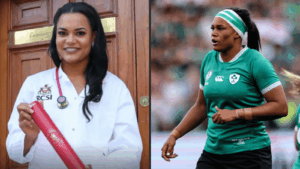
But following a freak injury, the fragility of sport was made painfully clear to her. “Since then I’ve always advocated for the importance of developing an identity off the pitch and ensuring your self-worth isn’t tied solely to sport.”
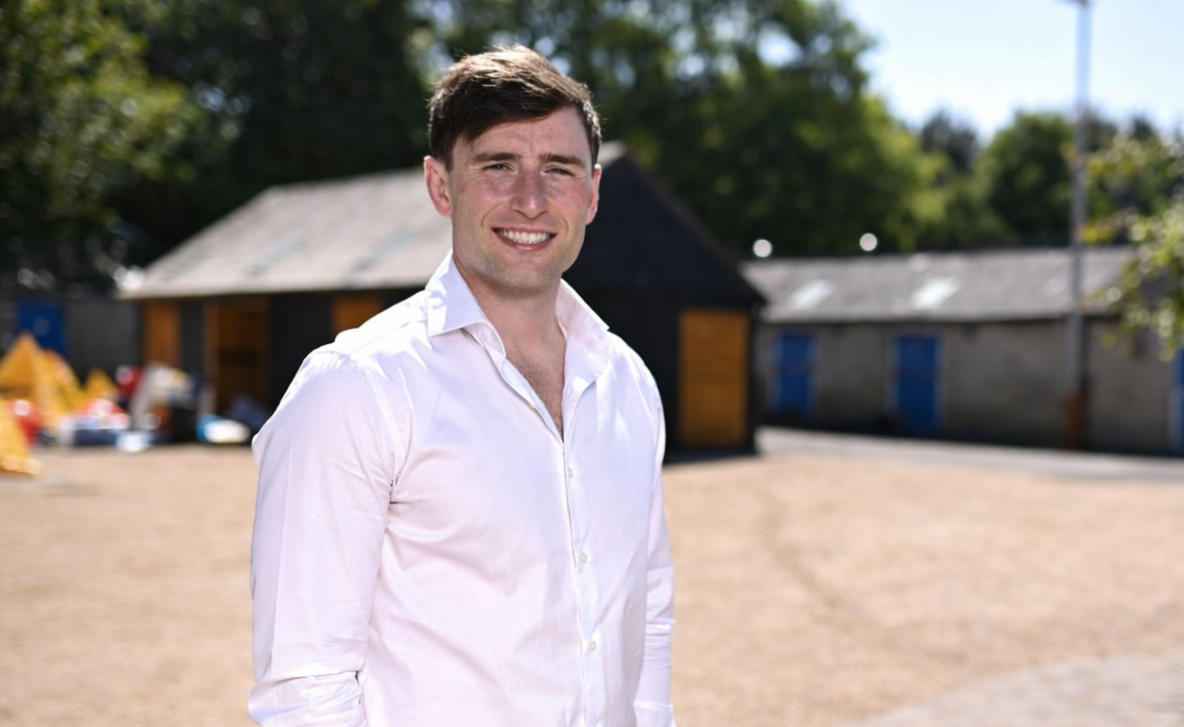
For many professional athletes, Corri Fallon’s words capture a real struggle: balancing the intensity of elite sport with the preparation needed for life beyond it. It is precisely what former Irish rugby sevens captain Billy Dardis seeks to address through The Ireland Sports Fund (ISF), an initiative he has established to help young athletes pursue an education alongside their rugby careers.
“I was very lucky to get the Ad Astra scholarship with UCD back in the day,” the former Leinster academy player recalls. “I was also a recipient of the Goodbody Bursary through RPI (Rugby Players Ireland) when I was doing my masters.
“So I’m very aware that I was well supported throughout my education. With that help I was able to do college properly, and that led me to the kind of roles I’ve been able to take on since I retired.”
However, following the discontinuation of the Goodbody bursary programme during the COVID-19 pandemic, Dardis became increasingly aware of the unease amongst his younger teammates in relation to their ongoing education. As captain of the Irish Men’s Sevens side, Dardis always kept his ear to the ground.
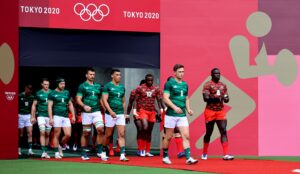
“There was a definitely a growing consensus that there was little point to college,” he says. “Lads were struggling to get to lectures and to keep up with the workload. On top of that the cost of deferring their place was too much. Many of them felt stuck and seriously considered dropping out.
“It was a bit at odds with a cohort of senior players in the squad who were looking in the opposite direction, many of whom were taking on roles in industries of interest. It wasn’t about the extra income but with a bit of encouragement from RPI, we started to appreciate the opportunities we had to transition out pretty cleanly, without having to start from scratch.”
Eager to help his younger colleagues, Dardis initially consulted with a group of his close teammates who each pledged to make a set contribution every year if it was to help a squad member through college. He approached his RPI Player Development Manager for advice and soon, the foundations for The Ireland Sports Fund were in laid.
Unfortunately, none of Dardis’ immediate peers were able to benefit owing to the cessation of the Men’s Sevens programme. However, through his role on Rugby Players Ireland’s Executive Board, Dardis recognised that the challenges some of his teammates faced were far from unique. The initiative’s focus was therefore broadened to support players across other programmes.
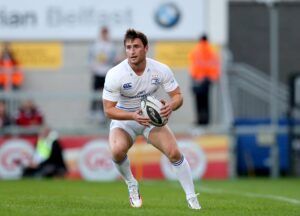
“When I was an academy player in Leinster, I was on €4,000 a year,” Dardis says. “A lot of the guys were trying to live in Dublin or away from home, pay rent, pay for petrol, college, food and have a bit of a social life, all on about €333 a month. Things may have improved for academy players, but the cost of living hasn’t done them any favours.”
Rugby Players Ireland have been central to improved conditions for academy players across the country. The players’ association has now played an integral role in the establishment of The Ireland Sports Fund by allowing it to leverage the Rugby Players Ireland Foundation’s charitable status.
“That was a key point in the process because eyes were drawn to it,” Dardis says. “By tapping into RPI’s credibility, I suddenly found myself in front of powerful people who had a genuine interest in donating.
“I remember sitting opposite an influential philanthropist who told me that he was overcommitted for the current year,” Dardis recalls. “Then he turned around and said, ‘I can give you €10,000 for now’.
“That was a significant moment for me, personally. I had put a lot of work into the ISF to that point and it was the first time it felt real because someone believed in what I was trying to do. It was an unbelievable feeling – as good as any I experienced on the pitch.”
However, Dardis is keen to assert that the Ireland Sports Fund is more than financial aid. Indeed, the application process (which was kindly handled by MindaClient) required applicants to submit a holistic appraisal of their merits.
“The panel took a very rounded view,” he says. “Yes, we obviously looked at education and financial need but we also asked: are you showing leadership? Are you contributing to your community? Are you doing as much as you can off the field? That stuff was just as important to me.
“Some of the stories coming through were overwhelming. We had players from single-income households balancing construction work, provincial training and college. Others were dealing with long-term injuries and the mental health impact that comes with that. One player was racing home every evening to support a terminally ill parent.
“We also had someone commuting up to six hours a day to train and study, while another was committed to college but couldn’t afford a laptop and was studying in a community centre every night.
“The resilience and ambition on display was extraordinary,” Dardis says. “And for a sport often perceived as affluent, the reality on the ground was very different.
“Importantly, the stories we heard also raised a big question: how much more could these players achieve if some of that burden was eased?”
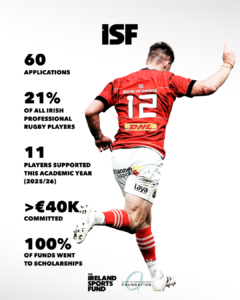
The Fund’s first full year has already demonstrated its demand and impact. Eleven scholarships for the 2025/26 academic year have been awarded with €40,000 committed in funding. 100% of received funds has gone directly to players.
The level of demand also speaks for itself. Across two application windows, more than 60 submissions were received, representing 21% of Ireland’s contracted professional players across the men’s and women’s game.
“The important thing to remember here is that even small grants can have an outsized impact. To someone who might only be on €12,000 a year, €3,000 is very significant. It can go towards fees, books and essential equipment, freeing up their money elsewhere.
“But more than that, I like to think that the ISF is also about opening doors, giving advice, connecting players with mentors and creating a valuable network.”
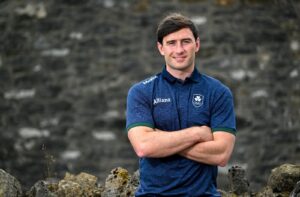
As Vice-Chair of the Olympic Federation of Ireland Athletes’ Commission, Dardis is acutely aware that rugby is not the only sport facing these challenges. In time, he hopes the model can extend across disciplines. For now though, his focus remains firmly on the ISF’s sustainability.
“My priority is to ensure the long-term future of the Ireland Sports Fund,” he asserts. “If we can keep supporting players year after year, helping them build something alongside their rugby, then we’re doing something meaningful.”
By investing in education and personal development, the Ireland Sports Fund is helping ensure that players are not left asking, “who am I?” when the time comes to retire. Instead they are being empowered to take their next step with confidence.
For more on the Ireland Sports Fund, click here.
Back to News