

Inside the Ireland Sports Fund
11th March 2026
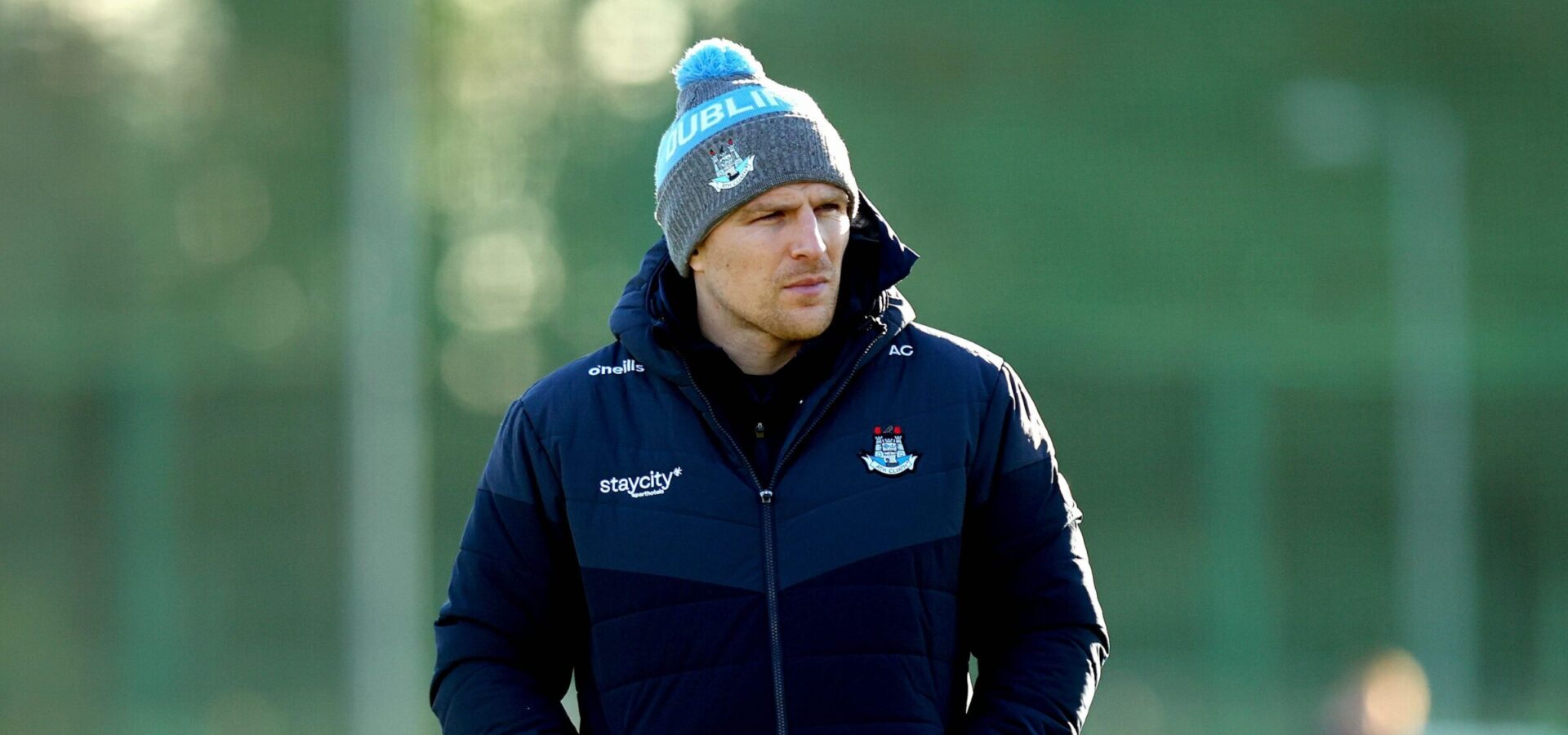
Sitting in the offices at Rugby Players Ireland last year, Andrew Conway paused for a rare moment of quiet. Pushing his chair back, he stepped away from his desk in search of some fresh air after a lengthy consultation with one of his early 5XFlow clients.
The peace didn’t last long though. Before he could reach the exit, his phone began to buzz again. A brief look at the screen and Conway turned back on himself, shutting the door for another few hours.
Between projects, building a family home, and moving from Limerick back to Dublin, Conway’s first year running 5XFlow was an exercise in balancing chaos. Yet, looking back, he sees it very differently now.
“I think there’s always a danger that you’ll overthink and overcomplicate it,” he says of setting up a business. “It mightn’t have felt ideal at the time, but it was actually a bit of a help that there was so much else going on in my life.
“It meant I didn’t have the headspace to get caught up in worry. I didn’t concern myself with client numbers, or measuring how busy I was. I just knew that if I held up my end of the bargain with the people who had engaged me for a service, things would play out as they should.
“I’m not saying that’s the correct approach for everyone starting-up a business” he adds, “but it was right for me and I was comfortable with it because I had been the same as a player: if I took care of the Xs and Os, I knew the rest would follow.”
Conway’s professional rugby career came to an enforced end in November 2023. With 30 Irish Rugby caps, in addition to almost 200 games split between Leinster and Munster, he went some way to fulfilling the vast promise that greeted his arrival on the senior stage in 2010.
Yet early on, he admits that he struggled to leverage the undoubted talent that had seen him long-touted as the next big thing in Irish Rugby circles.
“I remember sitting in a Sports Psychology lecture at IADT when I was about 21 and being asked why I do what I do,” Conway recalls. “I said something like ‘because it’s my job’ and at the time I don’t think I realised how hollow that sounded.
“I probably came very close to throwing my potential away around then,” he reflects. “Thankfully I found my way to Munster where I was surrounded by guys like Paul O’Connell, Jerry Flannery, and Felix Jones. They were such impressive characters.
“Those guys taught me a lot about internal drive and the ‘why’ I’d struggled to answer before. Through their example, I realised it wasn’t about medals or jerseys, but about being the best version of myself and adding value whenever I could. It completely reframed everything for me.”

Reading Conway’s columns these days, it’s always striking how much detail he recalls about his career. It turns out that throughout his playing days he kept a journal that captured his thoughts and reflections on each game and training session. Today he treats those notes as a kind of roadmap, revealing patterns of peak performance, moments of overreach, and times he coasted.
Upon his retirement, the Dubliner had the good fortune to be able to take some time for himself and his young family before jumping into employment. He also spent this period reading back on the notes that told the story of his career.
His musings would ultimately form the blueprint for 5XFlow, a performance strategy business dedicated to helping executive leaders and elite athletes build internal authority, operational clarity and sustainable execution.
“Crucially, the work we do is as much about the human experience as it is about professional performance” he says.
Central to 5XFlow’s approach is identifying the triggers that empower individuals to thrive. By building an acute awareness of their unique profiles, Conway uses the strong parallels that exist between elite sport and the working world to help clients align their thoughts, behaviours and actions.
Already one year in, Conway says he would have “bitten your hand off” for the first year he’s had. Engagement has steadily grown, and unexpected opportunities have emerged. After supporting the Na Fianna club, he’s now involved with a rising Dublin hurling side and counts some of Ireland’s top Olympic, football, and rugby talent among his clients.
“One of the biggest things that’s jumped out is just how intentional athletes have to be,” he says of mentoring these athletes. “I’ve sat in team meetings with the hurlers at ten o’clock at night thinking, ‘how do these lads actually do this with full-time jobs?’”
“There is no margin for wasted time. They might have two collective sessions a week where they must absorb the physical and mental load, before going home late into the night and getting themselves right for a full day’s work.”
Conway acknowledges he could have done with a greater appreciation of that level of commitment during his own professional career. Yet he could also identify the similarities between both environments, and how the best players rise through quiet, deliberate and cumulative action.
“If you put a national rugby pitch session beside a provincial one and stripped away the gear, it wouldn’t slap you in the face who the international players are,” he poses. “The giveaway is in how the national players will be out early and how deliberate they are with what they’re doing. Those actions accumulate.
“That’s what we mean when we talk about controlling the controllables,” he adds. “You can’t control session times or work and family demands, but you can control how prepared you are, how deliberate you are with your time, and how honest you are with yourself.”

Outside of the changing room however, Conway has come to find that the same level of accountability can be harder to come by.
“The difference between elite performers in any field isn’t usually knowledge or talent. It’s human behaviour. And it seems I’m still learning that good intentions don’t always equal action.
“The dressing room culture I’m used to is full of honesty, transparency and accountability but on this side of the tracks life gets busy, people drift, and not everyone is ready to commit the way they think they are.”
Indeed it has been Conway’s experience that people tend to shy away from the consistent action he craves. Such is the way of the world, that many come to their meetings in anticipation of a ready-made solution to the challenge they might be facing.
However, there is no quick fix. Instead, clients must be prepared to take responsibility and build a body of work. Conway is then on hand to give them the tools to ask better questions, raise their standards and keep returning them to their internal driver.
He takes great fulfilment from the human-centred focus that is at the heart of 5XFlow. And while the performance of the business matters, Conway’s whole point is that it isn’t the whole story.
Having started in January 2025, Conway acknowledges the he is still learning, iterating and adjusting his approach. “It’s scary. It’s uncertain. But it’s incredible,” he says. At 34, he’s conscious that few people get the chance to start again as he has.
“Every rugby player is forced into reinvent themselves,” he points out. “Once it’s taken away, you have to sit down and figure out what you want your life to look like. Some can be daunted by that reality but I think it’s such a brilliant opportunity.”
It’s a process he believes many outside of professional sport simply assume isn’t available to them. Careers harden. Roles narrow. Momentum replaces intention. However, Conway doesn’t see it that way.
“I’d often think of Brian O’Driscoll in this context because he reinvented himself about four times over the course of a 15-year rugby career,” Conway says. “What worked early on, wouldn’t have worked later. The standards may have stayed the same, but how he met them had to change.”
For Conway, that lesson applies across the board. Consistency matters, but so does evolution. Accountability matters, but so does context. Performance is important, but not at the expense of the life wrapped around it.
That thinking underpins the way he’s structured his own days. Running 5XFlow, being present for his young family, and showing up properly for the people around him.
While he remains connected to many former teammates, Conway has deliberately kept his inner circle small.
“We don’t need long calls,” he says. “Every so often someone will send a message: ‘all good?’ If you get an ‘all good’ back that’s enough. We all know we’re there for each other.”
It’s understated and built on the same quiet habits he once relied upon as a player. Rugby may no longer dictate his week but the principles remain.
Conway isn’t chasing scale for its own sake. He’s focused instead on alignment between how he works, how he lives, and what he values.
“The highest form of intelligence is your ability to create the life you want,” he says. “That means understanding yourself, taking responsibility, and being honest about what actually matters to you.
“Once you do that, the next step will feel entirely your own.”
Back to News