

Inside the Ireland Sports Fund
11th March 2026
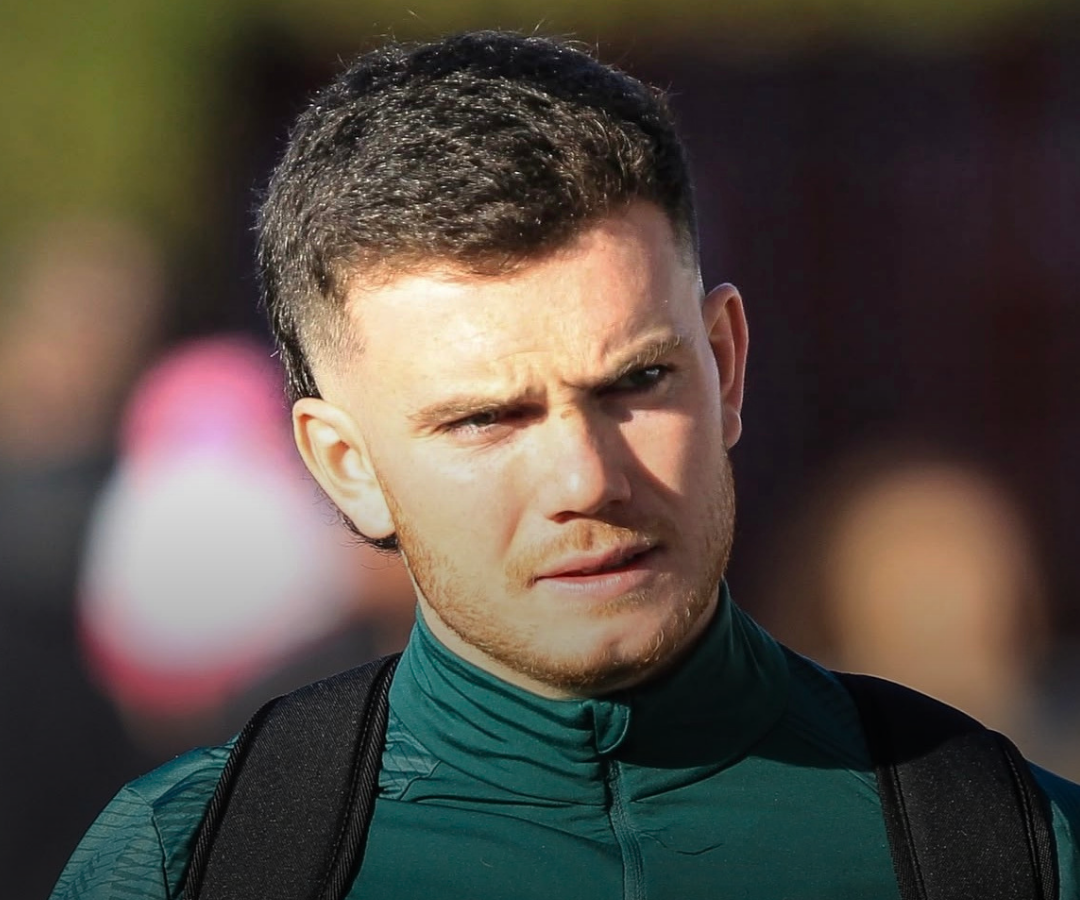
There is a temptation to assume that something has gone unfinished when a player steps away from the game before the knees have fully given up. It can be like closing a book with a few chapters left to read, a lingering sense that the best bits may still be ahead.
There are some who are happy to park things though. Hugh O’Sullivan would be one. Over time, he gently came to the conclusion that he’d given his all, and it was time for something different.
“I’ve never really been one to stand back and just hope for the best in any given scenario,” O’Sullivan reflects. “I have always been very proactive in pursuing my passions in sport or otherwise. If there was something I wanted to do, or any area I wanted to learn more about, I just went and did it.”
A Third Secretary with the Department of Foreign Affairs since last July, O’Sullivan is enjoying life back in Dublin, grateful for the stability his current posting provides. To a casual observer, his career may appear non-linear and varied. In reality, each transition was purposeful and assisted in laying the foundations that would bring him to this point.
Impermanence is the unspoken tax of professional rugby, particularly in England where O’Sullivan has played out the past few seasons. Across the water, clubs have been wobbling, owners have gone missing and players’ futures became provisional.
O’Sullivan had lived it first-hand. Having broken through at Leinster, he moved to London Irish (which he views as the most enjoyable period of his career) but the Exiles’ subsequent collapse left a scar on English rugby. Thereafter he uprooted to Newcastle Falcons, where the ground beneath the sport felt increasingly precarious.
“The turmoil throughout the 2024/25 season was a turning point for me,” O’Sullivan maintains. “It was like déjà-vu, bearing in mind what unfolded at London Irish. We knew the owner was looking to sell, and the club were not in a position to offer contracts to anyone as funding hadn’t been secured for next season. There was a sense of impending doom around the place.
“With that, I just had enough of the instability around the club which made me step back and reflect on what I wanted moving forward.”
For O’Sullivan, it came as a disappointing realisation, albeit a pragmatic one. He had grown to like Newcastle very much. It was an honest and kind city that reminded him of Dublin. He could have stayed and pursued other rugby coaching opportunities in the U.K., but he recognised it was time for a change.
O’Sullivan’s proactivity is woven right through his story. From his early days at Leinster to his time in England, he was always willing to do, to move and to grow. That same mindset has led him to a very different arena: working on Ireland’s Official Development Assistance programme, and bilateral engagements in West Africa.
To some, the change of direction may seem unexpected. Yet the more you listen to Hugh O’Sullivan, the more his follow-through reveals itself. This is not a story about leaving something behind. It is about carrying lessons forward.
O’Sullivan entered Leinster’s academy in 2017, and at a time when the province was cementing itself as a rugby powerhouse. Over the ensuing seven years, Leinster would contest five Champions Cup finals.
It was also a curious period. Eligibility rules shaped selection in decisive ways. With Luke McGrath the established nine, Scott Fardy and James Lowe generally occupied the two ‘overseas player’ slots allowed in a matchday squad.
This opened the door to an eager but inexperienced O’Sullivan who regularly deputised for McGrath, leaving Jamison Gibson-Park to continue on his journey to become one of the world’s best scrum-halves from the sidelines.
“I got a lot of game time early, and probably skipped a few phases of my development,” O’Sullivan reflects. “At the time you’re obviously ecstatic to be involved. I was playing in Europe and getting exposure at a level that many players spend years chasing.
“But with hindsight, I didn’t get the same run-of-the-mill apprenticeship experience that the other lads got. I came through the academy at a similar time to Dan Sheehan, and he spent a lot of his time scrapping away in the AIL, under the radar, and that benefitted him in the long run.
“In those early years, opportunities to get a full 80 minutes under my belt were actually few and far between. I was regularly either in the 23 man squad or a travelling reserve and so I rarely got released to the AIL.”
The intensity to O’Sullivan’s rise was also mirrored off the field. A recipient of the Rugby Players Ireland Personal Development Bursary in 2018, he was also committed to full-time study at Trinity College where had undertaken a PPES degree (Philosophy, Political Science, Economics and Sociology).
“Looking back now, it was an extremely busy period,” O’Sullivan muses. “The balancing act between my rugby and academic commitments in Trinity was challenging, though I probably didn’t fully recognise at the time.
“But to be honest I have no regrets. I didn’t want to compromise on either as they were both priorities for me. There were times when I was extremely busy studying, while also playing some of my best rugby, so there is no real pattern of one having negatively affected the other.
“Any young player now would bite your hand off to get the exposure I got with Leinster so early on. It was so full-on that my college work was actually a bit of a respite from the rugby bubble.
“It was just the way the whole thing played out, so I just put my head down and got on with it.”
While his parents gave him the latitude to decide what was best for him, it seems clear that their influence was such that he knew not to place all his eggs in one basket. This position was closely aligned with that of Rugby Players Ireland.
This has meant he hasn’t shied away from extra work either. In recent years he has completed a MSc in Sustainable Development, while he has also written rugby analysis articles as Gaeilge for Balls.ie, work that has led him to a role with TG4. He recently appeared on screen sporting a big black eye which he had picked up in an AIL match with Old Belvedere. More plates. More juggling.
This restless instinct has proved invaluable. When many faced a reality check as uncertainty followed him to Newcastle, O’Sullivan already had his next move in motion. Applying to the DFA may have initiated a long application and interview process, but there was no hanging about.
Now, O’Sullivan finds himself working within the Development Cooperation and Africa Division, the very area that formed the basis of his academic research into the Government of Ireland’s development assistance programme, known as Irish Aid.
“I feel very lucky,” he admits. “I had come close to the brink several times in the game, so I made sure I always had options at every stage. I think finishing on your own terms like that can make a big difference.
“It wasn’t all straightforward. I’d never actually done a job interview for a start but I knew I had plenty of time on my hands in Newcastle to prepare as best as I could. My girlfriend Emily was also a huge support through the entire process.
“Thankfully I was offered a role, and I’m grateful that the DFA gave me the time to honour my commitment to Newcastle before starting up. It also gave me the time to improve my French as I knew my Leaving Cert level wouldn’t cut it!”
If rugby is tribal, the DFA is quietly collaborative. Hugh now works in Dublin’s city centre within a sprawling organisation that deals in long timelines, careful language, and collective responsibility.
“The most fascinating thing is that you’re never speaking as yourself,” he reveals. “Everything is Ireland’s position. Everything has to be backed up. You have to keep up to speed with developments and you learn to be very precise.”
O’Sullivan’s current role, as a Desk Officer for West Africa, sees him in regular communication with the Irish embassies in Nigeria and Senegal. No two days are the same. Some days he’ll be preparing briefing materials for government ministers. On others he’ll be coordinating parliamentary responses to political or humanitarian matters.
“I’ve entered the DFA at the recruitment level for the Irish diplomatic service, and it’s the first step towards more senior positions including Ambassador roles abroad, but that’s a long way down the line yet! For now, I’m enjoying getting to know more about Ireland’s relations and work in West Africa, as well as responding to any significant developments in that part of the world.
“It’s pretty niche work but I wouldn’t call it narrow. I spent a few days in Dakar recently, attending EU meetings as well as visiting our embassy, and from that I developed a much better understanding of what diplomacy looks like in practice and the work our embassies engage in.
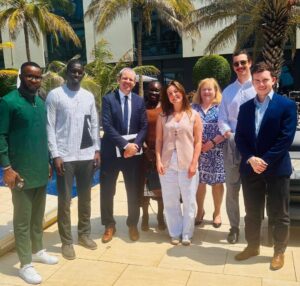
“Being present in the room and getting to see an Irish diplomat speaking on behalf of the country is a very impressionable experience. It gives a real sense of the importance of our work.
“In general, it’s amazing to see the high regard in which Ireland is held. In Africa in particular, a lot of Ireland’s relationships are rooted in the work of missionaries, and invariably you’ll still hear stories of people in senior positions across African countries who were taught by Irish priests and sisters.”
Six months into the role and it is evident that O’Sullivan is thriving. Yet he concedes that it hasn’t been without its challenges.
“In my new role, the results of my work aren’t always immediate’” he admits. “Rugby is very tangible. You train, you play, you physically feel it. You score tries, make tackles. Everything is quantifiable. Whereas in my new role, I’ve come to appreciate more the impact of longer term strategic approaches.
“No disrespect to rugby, but when you step away from it you begin to realise how insulated it can be. I loved that bubble, I just have a better understanding of it now looking in from the outside.
“Stepping into this new role has made me more aware of how much lies beyond the bubble I had been immersed in during my rugby career.”
And still, rugby remains an important part of his life. This season O’Sullivan has brought some invaluable experience and leadership to a young Old Belvedere group who are stabilising their place in Division 1A. Another project, another thing to keep ticking over.
“Everything I’ve done, I did it because I enjoyed it, not because I felt pressured,” Hugh says, “the encouragement from the support network around me was unconditional, which I’m very grateful for.”
Back to News